Showing posts with label Plants. Show all posts

Saturday, April 15, 2017

Agrosol

Photosynthesis.
Let us look into part of Photosynthesis. Photosynthesis is a process used by plants and other organisms to convert light energy into chemical energy that can later be released to fuel the organisms' activities (energy transformation). This chemical energy is stored in carbohydrate molecules, such as sugars, which are synthesized from carbon dioxide and water – hence the name photosynthesis.

Carbon dioxide is converted into sugars in a process called carbon fixation. Photosynthesis provides the energy in the form of free electrons that are used to split carbon from carbon dioxide that is then used to fix that carbon once again as carbohydrate. Carbon fixation is an endothermic redox reaction, so photosynthesis supplies the energy that drives both process. In general outline, photosynthesis is the opposite of cellular respiration, in which glucose and other compounds are oxidized to produce carbon dioxide and water, and to release chemical energy (an exothermic reaction) to drive the organism's metabolism. The two processes, reduction of carbon dioxide to carbohydrate and then later oxidation of the carbohydrate, are distinct: photosynthesis and cellular respiration take place through a different sequence of chemical reactions and in different cellular compartments.

Carbon dioxide levels and photorespiration
As carbon dioxide concentrations rise, the rate at which sugars are made by the light-independent reactions increases until limited by other factors. RuBisCO, the enzyme that captures carbon dioxide in the light-independent reactions, has a binding affinity for both carbon dioxide and oxygen. When the concentration of carbon dioxide is high, RuBisCO will fix carbon dioxide. However, if the carbon dioxide concentration is low, RuBisCO will bind oxygen instead of carbon dioxide. This process, called photorespiration, uses energy, but does not produce sugars.

Now what if we can create an environment whereby the carbon dioxide concentration is at consistenly maximum level? How would your plant react?

On december 21st 2007, company AGROsolution launched into one of the most important future markets.
Agriculture and Food!

It is 100% growth energy derived from natural minerals and without any chemical additives!

AGROSOL was developed to enable and promote healthy plant growth.

Plants are supplied from the outside with foil and soil fertilizers, providing for missing nutrients. As water becomes scarce and groundwater tables recede, supplying the plants with sufficient amounts of water is becoming increasingly difficult. As a consequence, artificial irrigation needs to be applied. 

These two factors (supply of nutrients and water from alternative sources) have been common knowledge for quite some time. However, what is still largely unknown (especially in open land cultivation) is CO2 fertilization.
Agrosol at Agronet Farms, Video 
Plants need a certain CO2 balance to achieve ideal growth. The optimum level for photosynthesis is a CO2 content between 0.1 and 1.0 percent by volume. Air has a CO2 content of only 0.03 % by volume. Therefore, plants are operating way below their full potential. 

The plant is literally „struggling for air“. This is where AGROSOL comes into play. 
AGROSOL is mixed with water and is applied onto the leaves surface via a fine spray mist. Since the discharge of CO2 takes place inside the leaf, this CO2 production does not generate a burden for the environment.

In fact, quite the opposite is true: the plant converts the CO2 into glucose and proteins, discharges higher amounts of oxygen, and thus contributes toward the „green lung“ effect. Once AGROSOL has been sprayed as a fine mist onto the leaf surface, it enters the plant via the stomata. The minerals discharge CO2 inside the plant. This boosts the production of glucose and proteins and in turn, increases the amount of oxygen discharged into the environment.
AGROSOL is mixed with water and sprayed onto the leaf surface in the form of a fine mist.


AGROSOL can be mixed with all commercially available fertilizers and plant protection materials.
Agrosol has distribution world wide. Their Asian Network manages 22 Countries, including Malaysia.
World class product! How can we acquire it? Well, MNC, world class products, this is only made available to the big boys, big corporate plantation in very high potent commercial scale volume and packing.

As I am back to being an entrepreneur, me and my friend is thinking, what about the Gardeners? Hobbyist? Enthusiast? Small & Mid size farmer? Wouldn't this product we great for us? We are organizing to make this available to this group of users. Do us a favor. Leave a comment so that we can gauge the response and anticipate the quantity of this first batch and method of delivery. This express of interest is strictly under no obligation.

Why are we doing this? The more users, the more oxygen! 

Monday, May 26, 2014

Yamaha TTX 115i Ride.

Yamaha TTX 115i.
This bike is available in Thailand, but not Malaysia. Had an opportunity to ride it for 3 days in Koh Lanta. Bike was rented for 750 Baths for 3 days.
Kantiang Bay.

Specification is attractive for a scooter.
114 cm3 with fuel injection, giving 5.70KW@8500r/min and a torque of 8.70Nm@5000r/min. This should be adequate for a  leisure ride with 2 up on a small island.

First thing first, fuel up. Since am using for a couple of days, it's much cheaper to fuel up at a proper station, rather than those selling by the bottles. 130 Baths as there were some fuel in the tank.
Pic taken from Tigersachclub.

I choose the TTX based on it's styling. It looks Macho / adventurousness. Also ease of riding / handling.
The Houben.
As were staying at the southern part of Koh Lanta, The Houben, we started with a ride to the southern tip. Road was windy as it's village roads. First stop was Kantian Bay.
Cliff by Kantian Bay.

Kantian Beach.

We then proceed further south. Came across lots of monkeys and wild fig trees near the Mo Koh Lanta National Park.
Wild Figs
First day ride was a slow one as am not similar with the bike & road. Was a bit doubtful going off road to the beach on a very steep incline, still we made it with a bit of keeping the momentum and with 2 up. I would guess it has a gradient of more the 20%. Going down this slope was also a bit problem as there is no engine breaking (CV gearbox). The rear drum brake, cable operated was extremely stiff & hard, not much breaking power. Front disc brake is good, but then can over break on down slope (off road, cement road). Others were pushing up (no rider, Mat Salleh) the slope.

Afternoon we traveled north, then east to cross the width of the island, to Old Town on the Eastern side. As we were going down the cliff of the Eastern shore, the bike felt rather funny on uneven roads and corner. Was thinking maybe we don't have enough air pressure as I didn't check the tires. We missed Old Lanta Town, over shot and ended up in Koh Keh.

Handsome cat at Saladan.

We did see a sign, Old Town 6, then Old town 5, which I got confuse, thinking it was 6 KM till Old town, then 5 km to old town. In fact it was it was Old Town Road 6 & 5.
Meter gauge of Yamaha TTX. The frog was hitching a ride.

We stopped at Kok Keh for lunch, as it's the last village. Check on the rear tire, it was almost flat. Skipped lunch, check with the locals with sign language where to get it fix. Most of them pointed to where we come from. Manage to speak to a lady (young lady) and explianed to me that we have to go back to Old Town for the nearest fix. We rode with our weight close to the front. We reached the Kon Lanta Hospital and there is no more air in the tire. Had to leave my wify there and proceed
ed alone. 7 km down the road, which is a very long ride, with 3 stop to asked for direction, I reached Old town. Got the flat fixed for 40 bath. There are also a couple of bikes having flats. I am very impressed the the rim & tire is still good even running flat. Just a patch took care of it. Filled up the pressure, hit it with a spanner to gauge the pressure and declared it's good to go.

Rode back to the Hospital to look for my wife. OMG, could not find her there. Decided to ride back to Old Town. Finally saw her flagging me down a few kilometers down the road. She was trying to hitch a ride but no one stopped for her. She did flag me on my way up, but I didn't noticed.

Since we were there and I already now where old town is, we went there to so some shopping. Old town were set up by mostly Chao Lay (sea gypsies), Muslim communities from the south and the came the arrival of Chinese.
The Pirate's Den.

Chinese Shrine in the town center.
The Old Town now is predominantly occupied by Thai Chinese families. Bought some bags and cloths. Prices were very much cheaper here. Bought 3 pieces of mango (medium/large) for 270 baths. It was the sweetest mango I ever tasted, fiber-less and almost no seeds.
Lotus in Old Town. Most of the population love planting in Old Town.

Day 2, check out both the tires before we ride. Fuel gauge was a bit low. Filled up again at the gasoline station. Oophs no air pump. Rode further down. Did some off road to the the International Mediatation Center which has to pass through a palm oil estate. The roads was gravel with lots of small stones. Scooter being on a small wheels, I just keep the momentum, no sudden start / stop or change of direction. It was rather difficult as the throttle wasn't responsive. I just can't get it right. It was either too much or too little. Too much cause it to jerk. Too little cause it to stop almost immediately (rolling). After w got back on road, I tried to play with the throttle and find that it's with the bike (either no maintained properly). Made another stop at Klong Khong Beach, The Lanta Animal Welfare Center. Went to the Cat House to play with the cats. Erh still couldn't find a gasoline station with an air pump. Check on the front tire, it's still holding, just a bit low on pressure. Rode all the way to Saladan. Stopped for some shopping & massage. Finally I stopped by a motorbike repair shop and request them to fill up the front tire.
Sandy @ Old Town. Foxy is at lower left cornier catching flies.

Day 3, a long ride. Morning we rode all the way to Saladan. Had a massage at Serenity. It was great, better then the 1 we had yesterday. Serenity has a relaxing area at the rear of their shop. It's a must visit. Had tea & fruits there. Afternoon we rode all the way to Old Town. Stopped at Sandy @ Old town. Sandy has 2 very unique dogs. Foxy whom is always busy catching flies. Smiley has a punky fur.

After having the bike for 3 days, my view is that this bike is a great short / leisure commuter. Good for heading out to the market or sundry shop or do some take-away. On longer distance, the vibration kicks in. Even when I kept it at 60 ~ 70 km/h. On the rear, the foot rest is too small. Seat is not made for comfort (longer distance). Being a scooter, it's easy to ride & park.

Monday, October 28, 2013

Bagging Of Soursop, Annona muricata .

Bagging up Soursop fruits. Was inspecting my soursop and found some infected with mealy bugs.
Mealy bugs on my soursop.
After having treated them with power multicide, it started me thinking, why not bag it up. I don't really need to do it now as my intention is just to produce seeds for sapling. Just for fun. I used old news print, 2 layers as I wasn't prepared.

I'll do it with plastic bag the next time, most probably a size of 20" X 12". Actually I had deviced a plan to bag up with plastic bags, which I tried on the Jackfruit. Punched a couple of holes on the lower edges for water drainage / ventilation. Punched small holes along the perimeter of the opening. String it up with a raffle string. Climb up, bag the fruit and just tie up.
Annona muricata L

From my research, blue colored bags are better as insects don't register this color much. Even with the old news print, I try to abstain from colorful prints.

Bagging I'm sure shall not solve all our problems. I'm sure it helps on the fruit flies. Still need to treat for mites & bugs. I guess I can expect nicer fruits, lesser blemish and lesser fruit flies attack.
It rained heavily plus strong wind the night after I bagged. Upon inspection in the morning in the morning, I found 2 bags had fallen. When I'm back at the farm, shall redo after my vacation.

Thursday, December 6, 2012

Failed Grafting

Came back to my farm on the 3rd December 2012, after attending MAHA 2012 and spent some time home with my family. Finished checking on all my grafting, Avocado, Jackfruit and Rubber trees.

My blistered hand, after a week of treatment with moisturizer.
Avocado, I did about 140 plants. I now have 20 plants that I feel is good. 40 plants that is budding and 20 plants on a 'maybe'. Those that I feel is good, I've loosen the grafting tapes and plastic bags. The budding and 'maybe' plants, I had remove the tie on the plastic bag, hoping to reduce the humidity. Removed weeds and those unwanted buds on the rootstock. This is to "force" the grafted buds to grow.

For those failed plants, I had put them aside. I find that maybe half of them can be reused, some need time to regrow and some totally 'dead'. I consider this as another failed run as I am targeting a 85% successive rate.

The failed Avocados.
Jackfruit, I did about 90 plants. Have 10 budding, and 4 'maybe'. I thought Jackfruit was the 'easier' one and I was totally wrong. Maybe it's due to the latex?

From the failed plants, I find that most of the scion dried and even rotted. Am still trying to diagnose what went wrong. Too young  rootstock? Wrong Technique? Bad scion? Too much tension on the grafting tape? From the failed plants I had quite a high numbers totally 'dead'. Another failed run.

The failed Jackfruits & Rubber trees.
Rubber trees. I did 6 of them, all failed. I tried 2 side veneer, 1 T-bud and 2 bark graft. This maybe be most probably due to the not so fresh scion. The scion was taken from our Parcel 3 and was left for a day ( water soak) before grafting. There were no damage to all the 6 plants, other than the part on the graft not "taking".

Guess I on the next coming week, shall savage the failed Avocado first as I feel that I have improvement on the Avocado.

Stay tune for more updates.


Wednesday, July 18, 2012

Mother Nature, The Bad Weather Continue with 4X4 Off Road

The Weather must be playing a joke on us. It continued to rain, heavily. The rain had soften up the soil. Experiencing lots of topple over of plants in our Rubber plantation, Parcel 1, 2, 3 and 6. The rain also cause pressure on over access roads within our plantation. Soil erosion, water running off the road, causing heavy erosion. 
After doing our weed management for Parcel 1, 2 & 3, were doing our round on 14th July, this was a very memorial day. Our adventure started early in the morning. Our plan was brought forward (from 16th July as the weather forecast was favorable for 16th) to today as our helpers had ran out of food supplies. Our chore was simple, send in food supplies to our helper in Parcel 1, collect our equipment, spraying pumps and bush cutters, proceed to Parcel 6 and clear some weeds along the terrace.
The Slope taken on a sunny day.

Access to Parcel 1 is pretty straight forward  as road are in the process of being upgraded. The bad section is about the last few kilometers to our plantation. Our helper had locked up the store and went off to work in Parcel 3. Our Hilux got stuck at the middle of the up hill slope. The steep gradient at the lower right of the picture. We couldn't make a u turn and had to reverse all the way down the muddy & slippery slope. Jamming the brake is of no use as the tires are slipping like if you were on butter. Note we are already using knobby off road tires. Slide in to the side drain, on the hill side to control our decent. Finally made it to the bottom.
After collecting our equipment, we travel though the back road to Parcel 6. These roads are connecting road, between Palm Oil estate, ex logging track and some not too bad tracks public tracks. We had to transverse very slowly as it had been a while since I've used this road. Again we slide to the side, hitting the banks of the slope during a couple of descend. This time it's not too bad as there are banks on both sides. We managed to reach Parcel 6 in the early afternoon. Parked the truck by the road side and proceed with our work. By mid day as we were working deeper into our plantation, drove the Hilux down to our shed as the ground had dried up. Continued with our work.
Then came a sudden down pour at about 2.30 pm. We didn't have time to drive our Hilux back to the main track, which is just about 500 meters. We got stuck at the slope with high incline. We made lots of tries under the heavy rain. Then we heard some lorry noise and ran out to the main road, seeking help. They 5 ton lorry carrying palm seed is also stuck and had slip to the bank, blocking half the road. Found out from the driver that another 4X4 5 ton truck is on the way. Unfortunately, it also got stuck next to the 1st truck, making it impassable. They called for help and a heavily modified Hilux was send. Manage to pull out the 4x4 5 ton truck but not the 1st truck. They then decided to form a train, the 4x4 tuck, pulling the Hilux, then pulling the 1st 5 ton truck. Managed to free the 1st truck after many tries. The 2 truck left as they were heavily loaded and wouldn't want to go risk going down the slope again. With the power heavily modified Hilux equipped with huge knobby mud tires & winch, all of us figured that it should be an easy job as our truck was just lightly loaded.

Unfortunately our access road was too narrow, muddy, slippery and angled wrongly, slanting toward the cliff side. The Hilux gave up after 4 tries as it was slipping toward the cliff side and the driver feels it's too dangerous. He too has difficulty getting back to the main track as his truck keep slipping.

Had no choice but to abandon our truck. Trek out about 2 kilometers to the tared road to wait for our partner to take us home. While waiting, we chance upon another Toyota Land Cruiser (HZJ79), deems as the 4X4 work horse. It house a 4,200 cc diesel engine. Again we went in hoping to free our truck. The driver deem it to be too dangerous as it's still raining too muddy, slippery and angled towards the cliff. Suggested to wait till the ground dries up before attempting.

Abandoning out truck for the second time. We went home, totally wet, tired and feeling dejected. Our hope is to wait for the ground to dry up in a day or so. Then try again.

 Next day, which is a Sunday, manage to get a friend to help. A heavily modified Hilux, latest model, with a winch. The rain had stopped at dawn, ground had dried slightly, but still slippery. We waited till mid day. The Hilux manage to dislodge us from the slope with it's winch. Problem came when the Hilux was trying to reverse out. It nearly fell off the cliff side 3 times. Use our truck as an anchor to winch itself back onto the track as there were no large tree in the correct position. Each time, pulling us along as the track is still very slippery.
Agfer aligning the Hilux, we used spades and cangkor, to level slightly the track, hoping that it would not make the vehicle slip off the cliff side. We then chance upon another Toyota Hilux on the main track and requested his help to pull out the heavily modified Hilux. The Hilux made it out on it's own this time after leveling the track. It also used the bank side as a guide.

All of us made it out, back to the tared road. It is my first heavy duty 4X4 off road adventure. It was Man & Machine verses Nature & Weather. What a day! Experience gained in using winch and recovery of stranded vehicle. This is what real adventure is like, not like those planned trips with lots of backup vehicles and equipment.

The section where the 2 trucks were stuck.

The section where we were stuck.
We went back the next day to complete our work. As it was raining the whole night till dawn, we dare not risk driving down the incline even on the main track. This time we parked at the top and trek down the main track to Parcel 6. Had finished off trimming the weeds on Parcel 6. Shall need to drop by again next week to administer herbicide. Hopefully the weather shall improve by then.


The section where our rescuer almost fell off the track to the cliff side on the right.

Monday, January 2, 2012

Ending Year 2011

Year 2011 had just ended and am reflecting on the progress so far, since taking over the management  in October. This was a very challenging period as I need to learn up agriculture, management in agriculture and marketing our produce in a very short time. Being away from love ones, had some toll on me too. Thankfully  I have all the support from my love ones, family members as well as partners. Even though it was a bit stressful, this is a rare opportunity to have a 'crash course' hands-on experience.

Had done up and documented the Smart Partnership Joint Venture Agreement with our partners to work on these lands, developing it to a rubber plantation. Agreement for Parcel 1, 2 & 6 had been signed. Awaiting the return of Agreement for Parcel 3. These agreement map out the responsibility, expectation of all partners so as we can progress and move ahead with a streamline and focused direction. Being a long term project, that may last up to 25 years this also provides a continuity in terms of administration.

Am in the final stages of getting the work pass for our Indonesian helpers. This permit is for 3 years and we are doing it without the help of agents in order to save cost. Agents charge a fee of $1,400 to $1,800 per head.

Accessed all the land area of all Parcel, identified areas that we can still develop. I find there are still plenty of potential in all the Parcel. Making plans to expand the coverage as by increasing the planting density, as it shall contribute more during harvesting. Shall start with those that have the easiest access area. Parcel 1 & 6, followed by 3 then 2. Parcel 7 is still under the land dispute and shall have to wait till it's sorted out.

The trials conducted is almost done and had identified some short/mid/long term crops that we can plant and market. Groundnuts, pumpkins, sweet potatoes, tapioca and corn are the short term corps. Banana shall be the main mid term crop as it can be grown on all the Parcels. Long term crops are mostly fruits trees like Avocado and Sukun (Breadfruit). We had also finish conducting our marketing studies on these crops.

Am grateful that I had learn a lot these few months, which shall be put to full use this year. Had also build a strong working relation with helpers as well as partners. Morale and commitment had a big boost especially from our helpers. Year 2012, shall catch up and further our initial progress. Year 2012 shall be our year of Redevelopment.

Wednesday, June 1, 2011

Progress on Parcel 5

Sweet Potatoes, these were transplanted a week back via 'cutting' method. We cut lengths of about 7 to 8" and with roots. Plant it on the ground and watered it for the next few days. Some did not made it, but 60% did. This is growing now. Have to weed our the surrounding on the next visit. Once it starts to grow, it's easier to propagate further. We are still looking for the Japanese Potatoes variety.
Couples of frogs made home at our nursery. As it did not affect the germination, we left it be. Tadpoles are growing too. Hope it shall help us eliminate the mosquitoes and other insects. Come to think of it, Frog Farming?
Avocado are fruiting, we have 4 trees here. Shall check again when it's ready to plucking.
A small avocado tree ready for transplanting.
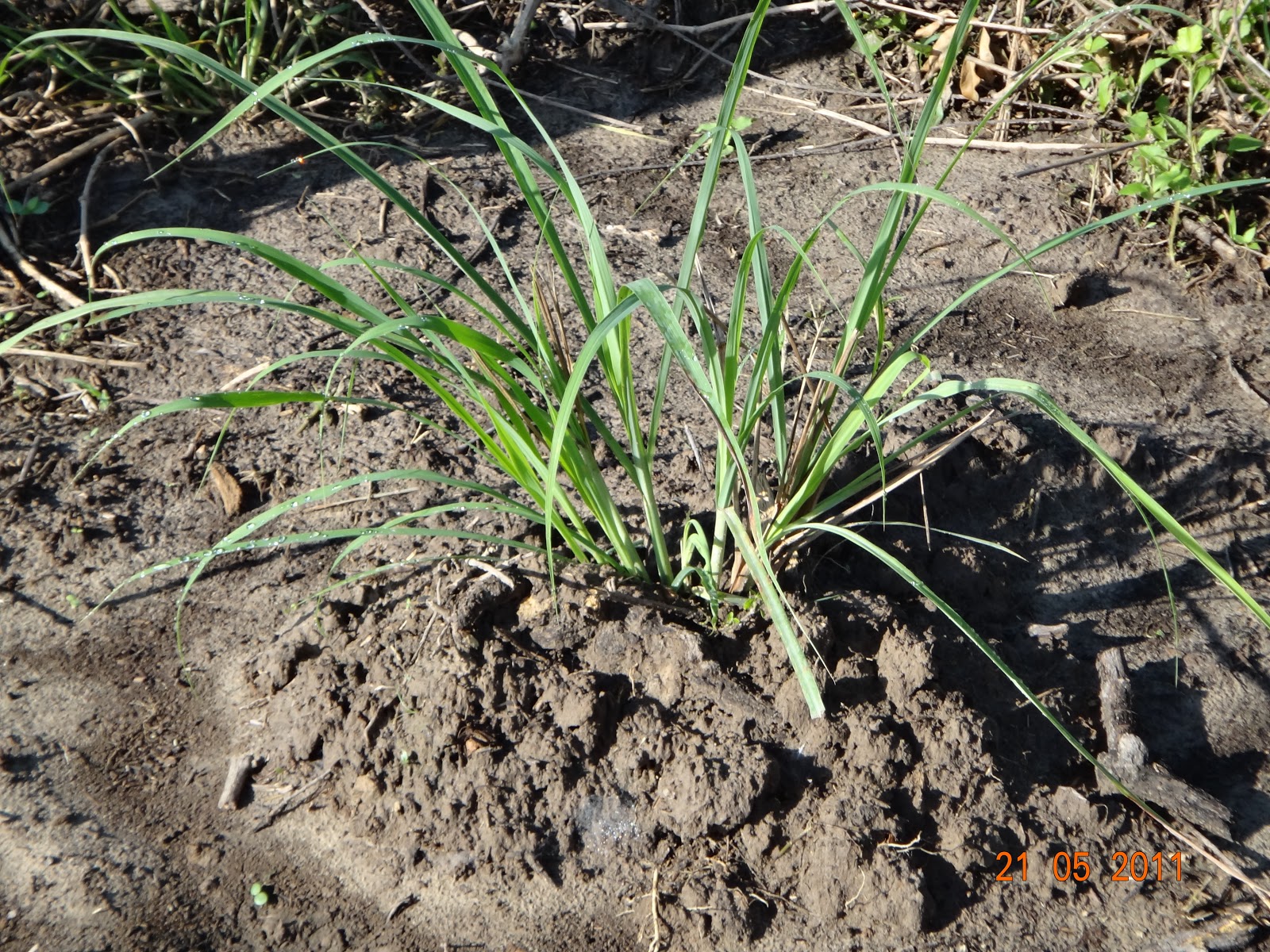
Our lemon grass is growing. These were planted back in March.
We have rows of Lemon grass along our perimeter. Banana too.
Our worker experimenting with Long Beans and French beans.
Our corn for chicken feed.
Our Yams is also progressing well.

Friday, May 27, 2011

A visit to Parcel 1

Parcel 1, my favorite Parcel. This is the Parcel where it all started. Our road /plan for farming. When I was a kid, I dream of having a farm full of banana trees. Parcel 1, the easier accessed (out of the first 3. Our base station here.
A very peculiar tree, growing only vertically with no side brunch at all. Parcel 1 is doing rather well except foe the stolen trees. As Parcel 1 was the first that was planted, the trees in this Parcel are the biggest. Soil at Parcel 1 is also beginning to turn brown, which is good for planting. This shall open other opportunities for us as integrated farming.
Another tall tree, but this was trimmed. Trimming / pruning the lower brunch so that the tree shall grow taller faster, lesser brunch, ease tapping in the future. Time for the next round of fertilizer in June. This time, we shall have to increase the quantity of fertilizing. Hope these tree shall be growing fast.


Other development in Parcel 1 is that the Banana trees that we planted had begin to bear fruits. Once it is harvested, we can start re-planting it's sucklings. Planting more cash crops, it maybe able to supplement our expenses. Shall be planning to plant more Banana trees in Parcel 1, then expand to Parcel 3. We have 4 varieties of Banana, Berangan, Pisang Emas, Cavandish and those that they use to make goreng pisang. Let's hope that we shall have plenty of Banana harvest by next year. We'll need to have more harvest per time as to cover our transportation as our farm is in "off" location.
Our helpers had started to experiment planting of white chillies and it seems to be thriving well. Shall most probably expand on these. This is also a cash crop that can be harvested in a couple of months. Last check the ex-farm price is $ 15 per kilo. Shall be leaving some to ripe to be use as seeds.
Our helpers are also experimenting with groundnuts and seems to be thriving too. Proper planting distance shall be 3 X 4 feet. This shall leave some space for the groundnuts to flower, ripe and drop to the ground. Without space to drop to the ground, no groundnut shall be produce. Let's see how much groundnuts it shall produce. Shall plan after we review the harvest.
Sweet potatoes, a hardy vine type of plant. Can be used as ground covering (preventing weeds ), young leaves as vegetable and the roots for food. We are still looking for the Japanese strain, (purple color skin and purple color roots. Ours now is a mixture of purple color skin, yellow roots and yellow skin, yellow roots.
Our helpers are trying long beans too. We are leaving the beans for seeds.
This is what had became of our failed ginger patch. Shall have to clean up the weeds and find the ginger. I guess just a couple survived.


Our chicken coop. Plant to start a large colony of free range chicken here. Last picture shows some young chillies trees in between the rubber trees.