Showing posts with label Papaya. Show all posts

Wednesday, August 2, 2017

Papaya Dieback infection in Malaysia

A papaya die-back disease was first reported in Malaysia by the Johor State Department of Agriculture in 2003. By the end of 2006 it had spread to five other states on the west coast of the Malaysian peninsula, affecting ca. 800 ha and resulting in the destruction of 1 million trees. Total yield losses were estimated at 200,000 metric tonnes, equivalent to US$ 58 million. The varieties affected were Eksotika, Solo, Hong Kong and Sekaki. Early symptoms included yellowing and necrosis along leaf edges followed by water-soaked areas on the bases of leaf stalks, crowns and along leaf mid-ribs. Fruit symptoms included dark spots on the skin and water-soaked flesh. Later, necrotic and water-soaked areas developed on stems and spread to the internal tissues, followed by secondary fungal infections. In advanced stages bending of water-soaked leaf stalks occurs, leading to dieback, and death of trees.
After 6 years of research & trials MARDI has come out with DIEBACK BUSTER.


DIEBACK BUSTER was launched on 1st August in conjunction with Exotic Star (M) Sdn Bhd at one of their farm in Dengkil. This even was graced by YB Dato' Nogeh Gumbek, Timbalan Menteri Pertanian & Industri Asa Tani.

A short video was also shownDieback Buster - Teknologi Kerintangan Sistemik Teraruh (ISR)

 Developments & trials were done in various area including this farm. Successful rate is as high as 95%.
 Some displays at their exhibition booth


Dr. Ganisan Krishnen, the man behind DIEBACK BUSTER.
  The Adjustable Volumetric Liquid Gun. This is also developed to ease application for bigger farms in order to reduce labor, thus reducing application time and cost.

A grafted Solo Papaya tree.

Sunday, July 23, 2017

Mycorrhiza


Commercial Potent Grade Mycorrhiza
Waste from roots is food for mycorrhiza fungi, waste from mycorrhiza fungi is food for roots.


What Are Mycorrhiza?

“Myco” – “rhiza” literally means “fungus” – “root” and describes the mutually beneficial relationship between the plant and root fungus. These specialized fungi colonize plant roots and extend far into the soil. Mycorrhiza fungal filaments in the soil are truly extensions of root systems and are more effective in nutrient and water absorption than the roots themselves. More than 90 percent of plant species in natural areas form a symbiotic relationship with the beneficial mycorrhiza fungi.

Are They Important?

Mycorrhiza fungi increase the surface absorbing area of roots 100 to a 1,000 times, thereby greatly improving the ability of the plant to access soil resources. Several miles of fungal filaments can be present in less than a thimbleful of soil. Mycorrhiza fungi increase nutrient uptake not only by increasing the surface absorbing area of the roots, but also release powerful enzymes into the soil that dissolve hard-to-capture nutrients, such as organic nitrogen, phosphorus, iron and other “tightly bound” soil nutrients. This extraction process is particularly important in plant nutrition and explains why non-mycorrhiza plants require high levels of fertilization to maintain their health. Mycorrhiza fungi form an intricate web that captures and assimilates nutrients, conserving the nutrient capital in soils.
Do You Need Them?

Undisturbed soils are full of beneficial soil organisms including mycorrhiza fungi. Research indicates, however, many common practices can degrade the mycorrhizae-forming potential of soil. Tillage, removal of topsoil, erosion, site preparation, compaction, fumigation, invasion of weeds, and leaving soils fallow are some of the activities that can reduce or eliminate these beneficial soil fungi. Scientific studies indicate endo mycorrhiza fungal populations are slow to recolonize, unless there is close access to natural areas that can act as a source of mycorrhiza spores to repopulate the affected area. Reintroducing mycorrhiza fungi in areas where they have been lost can dramatically improve plant performance with less water and fertilizer and at a reduced cost.

Benefits of Mycopwer ™
On Plants

Produce more vigorous & healthy plants
Create better water & nutrient development
Increase plant root establishment & development
Increase Yield & Crop quality
Increase plant survival rate at seedling & transplanting
Optimizing fertilization use
Increase plant tolerance to soil salinity, disease & drought
   

On Soil Structure

Greater water infiltration & holding capacity
Prevent soil aggregation through hyphae networking
Better resistance to soil surface crusting, erosion & soil compaction
Increase permeability to air circulation, 
Increase beneficial microbial activity & nutrients cycling
Efficacy gain typically allows a reduction of 30% to 50% of conventional fertilizer input
Additional of AMF in ecological restoration project (Phytoremediation) has shown improvement on the physical & biological soil properties, structure, nutrients availability & organic matter.

Healthy & Bigger root mass = Higher Yield & Better Quality.


Thursday, October 10, 2013

Parcel 1, October 2013

Parcel 1, our model farm.
Our vision for Parcel 1 is getting clearer by the months. Our rubber trees are measuring up to 420 mm in diameter. Very close to our targeted measurement. Of course not all trees grow at the same rate. There are some that are still very skinny and some are planted on a latter date. Overall the rubber trees are doing great.
One of the bigger tree, 420 mm.

Our vision for Parcel 1 is an integrated farm, having rubber trees as the main crop. Then we shall have supplementary crop of fruit trees. These are further supplemented with livestock, chicken and bees (much later).

Here we had planted more than 30 avocado trees, 80 soursop trees and more than 70 agarwood till date. On a smaller scale, we have some papaya, about 10 durian trees, 2 jackfruit, 4 mango and a breadfruit. We still have some bananas which we are phasing out and some pineapples. My plan for the papaya did not worked out as the time difference between planting was not right. Also at a long period, we didn't have any helpers at site. Anyway, as a fall back, we can always feed it to our chickens.

Chicken we have about 70 around, big & small.
Apiculture had not been started yet. It shall most probably be the last phase of development. I guess we can put in easily a couple of tens of beehives. There are so many plants here, rubber, palm oil, fruits, wild plants, unlimited resources of nectar.
Agarwood, planted on the inter rows.


Agarwood, planted on the inter rows.

Blame it on our government, even the chicken are racist. The blacks & the whites do not stay together.

Mango flowers.
Rooster.
Mango, already fruiting. Trying to identify what variety this is. Maybe can use this as a mother tree.

Our isolation new coop.
Newly planted soursop.

Another bigger tree.
Some of the trees during March.

Our hut with agarwood by the side.
Our avocado tree.
Our 1st avocado tree in between the rubber trees.
Another 75 Agarwood for planting in Parcel 1. Hopefully our retirement shall be well taken care of with the resins produced.
Summarise
Main crop : Rubber trees
supplemented by fruit trees, Avocado, Soursop & Jackfruit
Livestock : Free Range Village Chicken & Bees (yet to be started)
Retirement Fund : Agarwood / Gaharu


Thursday, August 29, 2013

Effect Of Raw Papain On Skin

Papain
Papain is a white colored latex that oozes out of the papaya when scratched, or when the plant is injured. There are many uses of papain, raw or processed. For the food industries, it's used as meat tenderizer. The enzyme helps to break down the tough bands between fibers in muscle tissue, making tough meats fall apart during the cooking process. For medicinal, (oral) it's used to aid digestion digestion problems, diarrhea, hay fever, runny nose, psoriasis. Treating infected wounds such as sores, ulcers, intestinal worms, or scars.

My experience with raw papain is when I have to help out to harvest our papaya. As we are short on labor. As we process our harvest in batch, when comes harvesting day, it's a full day process. Harvesting the papaya and post harvesting processing and grading.
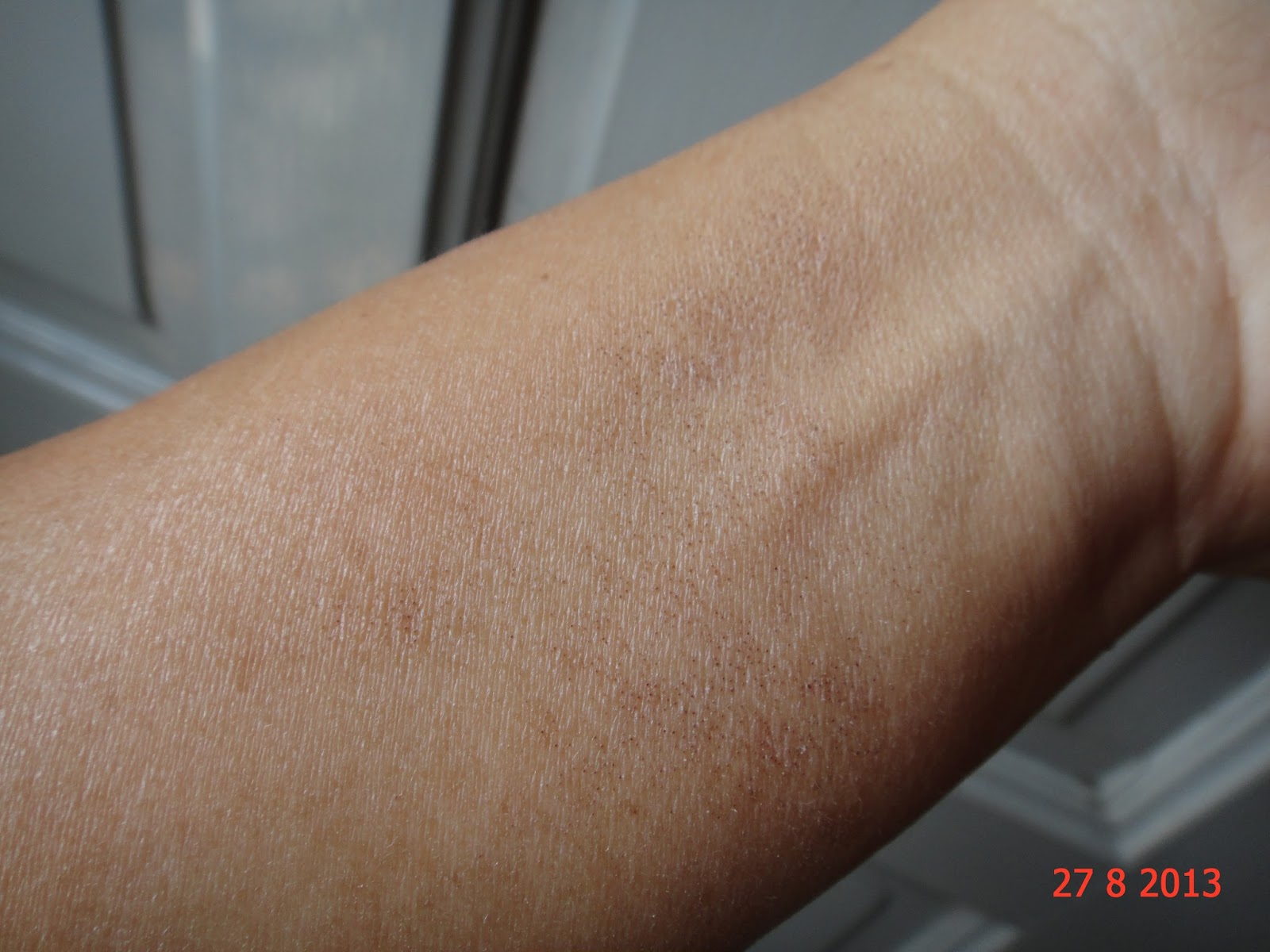
During harvesting I had to pluck the papayas from tree to tree and place them into the wheel barrow. At times when there are more than 3 papayas, I tend to stack them on my arms and belly. This papain kind of  drip and come into contact with my shirt. As more and more papain comes into contact, and soaked into my shirt, it creates something like a patch and soaked into my skin ( raw papain overdosed). This is made worst by heat of the sun and sweat.


These caused irritation and blisters on my skin. I even washed the blister during lunch break on mid day. It was very painful when it comes into contact with water.
At the end of the day, after taking a bath which I had also clean the affected areas carefully (still very painful), I started to apply burn relief cream and moisturizing lotion. I always have some Johnson baby lotion at hand in my room.
The affected area gradually dried and healed. I'm sure that it shall be fully healed in a couple of days.


While washing the papayas, I always feel that the outer layer of my palm (epidermis) gets wash off as well. It kind of remove all the dead cell and make my palm smooth. This is doesn't create blister as it's diluted with water and I always change the water (overflow). Maybe next time I'll soak my feet in it to remove the dead cells :-)

This also start to make me curious on how to make papaya soap. Maybe I can try it out one day.
 How to make your own Papaya & Cucumber soap.


Looks easy enough.


Wednesday, July 17, 2013

Short Farm Working Tour

 Working Tour.

Just finished a short working tour and shall make my way home tomorrow morning to keep my family company. Even though it's a short tour, I injured my right hand, sprained my right wrist and had plenty ant bites (even at my buttock). It's too challenging as I had been idle for quite a while, now my whole body is aching. Most of the time, it's mind willing, but body unable. Almost all my target fell short as I was too tired half way through. Must be getting old.

Thanks to my partner, whom had kept things going during my absence. There were too many challenges for us to handle. We had some pretty dry, then pretty wet days, which hinder our access. Left with only 1 helper. Luckily my partner managed to recruit some part timers to tie us through. Had to fine tune our strategy to fit.

The most well kept is Parcel 1 due to it's location. Managed to control the weeds here and even did partial fertilization. We are reverting back to organic fertilizer this time, hope to supplement back some Trace Elements (TE) and Calcium Carbonate.
Had 2 fallen trees, due to termites infestation. We had these treated a few months back, but seems that the woody part had been eaten and with strong wind. Had these replace with Jackfruit trees.
Wild bees are abundant here, still harboring the plan to go into Bees Farming once the rubber tress can be tapped. We brought in lots of rejects papayas to feed the chicken and it attract lots of bees. They also loves over ripen bananas. Shall research more to find out if these are suitable for Bees Farming. I notice there are 2 types and I'm sure the big black ones are not suitable.
The initial Avocado (seeds, not grafted) are doing well. We'll see when can these flowers or I might graft onto these later. Did a check on the grafted Avocados, most of them are doing well, 1 missing, 1 died. Checked on the Soursop that were planted next to the access road. A couple died and some were covered up by land slides. Managed to replaced some of these.
Our Free Range Kampung Chicken is about 60 chicken strong now. We are targeting it to reach 200 before we decide if we want to take it to a bigger scale. These are some of the 2 days old chicks.
Parcel 5, our little farm, had culled some papaya trees. Our market does not accept the yellow flesh and doesn't like the round fruit types. As we still have lots of seedlings, we manage to replace some. It'll take a while before we can replace all. Seeds selection and multiple planting can minimize this. I had failed to emulate the papaya farm into our rubber plantation as the rubber trees canopy is getting large and blocking off the sunlight. We can only do it on new planting / land when the rubber trees are small. Harvesting is also a problem in hilly conditions / difficult access as papaya can be harvested twice weekly. Still Papaya has certain advantage over Banana as a cash crops in Rubber Plantation.

Managed to recover quite a numbers of seedlings / plant-lets. We have about 50 Soursops, 200 Agarwood, 150 Jackfruits, 100 Avocados and 50 Mangoes, a couple of Limes and a Durian. Some of the Jackfruits plant-lets are too large for rootstock. No sure if it can wait as I bought 4 Honey Jackfuits, which I had just planted for scion. Maybe have to plant these first, then do a field grafting. Managed to graft about 50 Avocados plant-lets. Hope that the successful rate is acceptable.
The pruning scissor gave way and I injured my right hand. Had been using this scissor for a couple of months. May had used it to cut too thick a scion. This is the dis-advantage of using forged / cast iron type. Bought a new one of MS steel to replace. MS steel shall bend, but not snap. The old scissor spring (straight wound) always falls off, and the hold (shut) broke off not long after used. The new one compare much better (maybe it's new & sharp).
 One afternoon, dark clouds looming and it rained heavily not long after. Well, had a productive week and I did all that I could, given the circumstances as I'm still worry about my wife. Have a few hours of rest and shall start my journey home, first light tomorrow. Stay tuned.